
The way we consume news has changed faster than ever. In 2026, digital platforms dominate how people access information, replacing traditional newspapers and broadcast channels. Mobile apps, social media, and AI-driven tools are not just convenient—they shape what news reaches us and when. This shift is transforming journalism globally, making 2026 a pivotal year for the evolution of news consumption, where speed, personalization, and accessibility define the reader experience.
Rise of AI-Driven News Curation
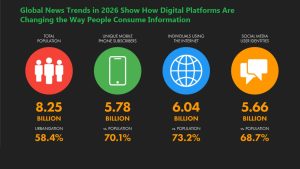
Artificial intelligence is increasingly at the heart of modern news consumption. Platforms powered by AI, including ChatGPT, Gemini, and Grok, analyze user behavior to deliver personalized news feeds. This ensures readers receive relevant updates quickly, cutting through the noise of endless content. Personalized news reduces information overload and keeps users engaged, but it also raises concerns about echo chambers and biased content. Despite these challenges, AI is shaping a future where news is smarter, faster, and more in tune with individual preferences.
Social Media as a Primary News Source
Social media has firmly established itself as a top source of news in 2026. Platforms like X, TikTok, Instagram, and emerging apps are redefining storytelling with short videos, threads, and reels. Influencers and citizen journalists now play a major role in breaking stories, reaching audiences instantly. Data shows that younger readers increasingly prefer social-first news, making these platforms critical for both information dissemination and engagement. The shift highlights how attention spans and storytelling formats influence modern journalism.
Subscription and Paywall Models Gain Momentum
Paid digital news services are becoming standard as readers seek reliable, high-quality journalism. Subscriptions allow news outlets to focus on investigative reporting and original content rather than relying solely on ad revenue. Popular trends include tiered memberships, premium newsletters, and exclusive multimedia content. As paywalls grow, readers are willing to invest in trustworthy news, which strengthens both accountability and journalistic integrity in the digital era.
Multimedia and Interactive News Experiences
2026 is the year immersive experiences redefine how we read news. Augmented reality, virtual reality, live streaming, podcasts, and interactive infographics engage audiences far beyond static text. For example, interactive maps of world events or live video coverage of unfolding stories make readers feel part of the action. Multimedia news caters to visual learners, increases engagement, and creates a richer, more memorable news experience than ever before.
Global Implications of Digital News Trends
Digital news transformation impacts regions differently, but the trends are universal. Traditional media faces declining readership, while online platforms gain influence. Journalists must adapt to new storytelling methods, balancing speed with accuracy. Simultaneously, digital literacy challenges and misinformation spread remain pressing concerns, highlighting the need for responsible consumption and fact-checking worldwide.
Future Outlook: What to Expect Beyond 2026
AI will continue to integrate deeply into news creation and curation. Generative AI may assist in writing, editing, and even verifying facts in real time. Regulators will likely introduce new rules for transparency and ethical content use. Emerging technologies, from real-time fact-checking to immersive storytelling, promise a news landscape that is faster, more interactive, and increasingly intelligent. The future of news is one where AI and humans collaborate to deliver information responsibly and efficiently.
Conclusion: Embracing the Digital News Revolution
Digital platforms and AI have reshaped the way we consume news, making information faster, smarter, and more personalized. Readers and journalists alike must adapt to these changes while remaining vigilant about accuracy and bias. As 2026 unfolds, embracing the digital news revolution is not just an option—it’s essential for anyone who wants to stay informed in a rapidly evolving world. The future of information belongs to those who engage thoughtfully and responsibly.