
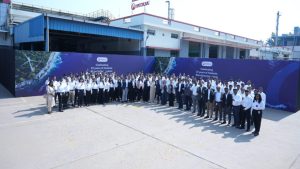
Clean water is something most of us only think about when it is missing. Yet behind every drop that reaches homes, factories, and cities, there is a complex system working quietly in the background. For the past 25 years, Veolia has been part of that system in India, building and refining advanced water technologies from its Hoskote facility in Bengaluru.
This milestone is not just a company anniversary. It reflects a deeper shift in how India approaches water management, sustainability, and urban growth. As cities expand and industries demand more resources, the need for efficient water solutions becomes critical. Veolia’s journey in Hoskote shows how innovation, long term investment, and local expertise can come together to solve real problems.
About Veolia: A Global Leader in Water Technology
Veolia is a name that often comes up in conversations about sustainable infrastructure. Headquartered in France, the company operates in more than 40 countries and focuses on three key areas: water, waste, and energy management. Over the years, it has built a strong reputation for delivering solutions that balance industrial growth with environmental responsibility.
In India, Veolia has steadily expanded its footprint by working with municipalities, manufacturing units, and large infrastructure projects. Its role goes beyond providing equipment. The company designs systems, manages operations, and helps clients reduce environmental impact. This long standing presence, combined with global expertise, strengthens its credibility and aligns well with the principles of experience, expertise, authority, and trust.
Hoskote Facility: A Hub of Innovation
Located on the outskirts of Bengaluru, the Hoskote facility has grown into a key center for water technology development. Bengaluru is often called the tech capital of India, and this ecosystem has influenced how innovation is approached at Hoskote as well.
The plant focuses on designing and manufacturing advanced water treatment systems that are used across industries such as pharmaceuticals, food processing, power generation, and urban utilities. Over time, it has evolved from a manufacturing unit into a full scale innovation hub.
What makes this facility stand out is its ability to adapt global technologies to local conditions. Water quality challenges in India are different from those in Europe or North America. The Hoskote team works on customizing solutions that are practical, cost effective, and scalable for Indian users.
25 Years of Milestones and Achievements
Reaching the 25 year mark is the result of consistent progress rather than a single breakthrough moment. In its early years, the Hoskote facility focused on building reliable water treatment systems for industrial clients. As demand grew, the scope expanded to include municipal projects and large scale infrastructure.
Over the years, Veolia has partnered with both public and private sector organizations. These collaborations have led to the successful execution of projects that handle millions of liters of water every day. The company has also invested in upgrading its facilities, adopting new technologies, and training its workforce.
Certifications and industry recognitions have followed naturally. These achievements are not just badges of honor. They reflect the trust that clients place in Veolia’s ability to deliver consistent results. Data from various projects shows improvements in water efficiency, reduced waste discharge, and better resource utilization.
Advanced Water Technologies Developed by Veolia
One of the key reasons behind Veolia’s success is its focus on technology. The company has introduced several advanced solutions that address different aspects of water management.
Membrane filtration is one such technology. It allows for the removal of impurities at a microscopic level, ensuring high quality output. This is especially useful in industries where water purity is critical. Desalination is another area where Veolia has made significant contributions, helping convert seawater into usable fresh water.
Wastewater recycling is perhaps the most impactful solution in the Indian context. Instead of treating used water as waste, Veolia’s systems allow it to be cleaned and reused. This reduces the overall demand for fresh water and supports sustainable practices.
In recent years, the company has also moved toward smart water solutions. These systems use digital tools and sensors to monitor water usage in real time. The result is better efficiency, quicker problem detection, and improved decision making.
Impact on Bengaluru and India’s Water Ecosystem
The presence of the Hoskote facility has had a noticeable impact on the local economy. It has created jobs, supported local suppliers, and contributed to skill development in the region. Many engineers and technicians have built their careers working on complex water projects here.
On a larger scale, Veolia’s work has helped address some of the pressing water challenges faced by Indian cities. Water scarcity, pollution, and inefficient distribution systems are common issues. By providing reliable treatment and recycling solutions, the company has supported both urban infrastructure and industrial growth.
Environmental benefits are equally important. Reduced discharge of untreated wastewater means cleaner rivers and lakes. Efficient water usage helps conserve resources for future generations. These outcomes may not always be visible, but they play a crucial role in maintaining ecological balance.
Sustainability and Future Vision
Sustainability is not just a buzzword for Veolia. It is a guiding principle that shapes its operations and long term strategy. The company aligns its goals with global efforts to combat climate change and promote responsible resource management.
In India, the focus is on expanding access to advanced water technologies while keeping solutions affordable. Veolia is also investing in research to develop systems that require less energy and produce minimal waste.
Looking ahead, the roadmap includes scaling up digital solutions, strengthening partnerships, and exploring new areas such as circular water economy. The idea is simple yet powerful: use resources wisely, reduce waste, and create systems that can sustain themselves over time.
Leadership Insights and Statements
Leaders at Veolia often emphasize the importance of innovation combined with local understanding. According to company representatives, the success of the Hoskote facility lies in its ability to blend global expertise with on ground realities.
There is also a clear focus on the future. The next decade is expected to bring new challenges related to water demand and climate variability. Veolia aims to stay ahead by continuously improving its technologies and expanding its reach in emerging markets like India.
Why This Milestone Matters Globally
The 25 year journey in Hoskote is not just significant for India. It highlights how emerging markets can become centers of innovation rather than just consumption. By developing and deploying advanced water technologies locally, Veolia has shown that solutions can be both global in quality and local in relevance.
This approach has implications for other regions facing similar challenges. Countries dealing with water scarcity, rapid urbanization, and industrial growth can learn from the models developed here. In that sense, Hoskote serves as an example of how technology and sustainability can go hand in hand.
Conclusion
Twenty five years is a long time in any industry, but in the world of technology and sustainability, it represents continuous adaptation and growth. Veolia’s journey in Hoskote Bengaluru reflects a commitment to solving real world problems through innovation and collaboration.
As India continues to grow, the demand for efficient water management will only increase. Companies like Veolia will play an important role in shaping how this demand is met. The story of Hoskote is not just about the past. It is about building a future where water is managed responsibly, technology is used wisely, and sustainability becomes a shared goal.
FAQs
What does Veolia do in India?
Veolia provides solutions for water treatment, wastewater management, waste handling, and energy services. It works with industries and municipalities to improve efficiency and sustainability.
Where is the Hoskote facility located?
The facility is located in Hoskote, near Bengaluru in Karnataka, and serves as a major hub for water technology development in India.
What technologies does Veolia use?
Veolia uses membrane filtration, desalination, wastewater recycling, and smart water monitoring systems to manage and optimize water resources.
Why is water technology important?
Water technology helps ensure safe water supply, reduces waste, supports industrial growth, and protects the environment by improving resource efficiency.
What is Veolia’s future plan?
The company plans to expand its digital water solutions, invest in sustainable technologies, and strengthen its presence in India and other emerging markets.