
The digital landscape is evolving rapidly, and so are the threats targeting individuals, businesses, and governments. As we move into 2026, cybersecurity is no longer just a technical concern—it’s a global priority. Hackers are leveraging artificial intelligence, quantum computing, and sophisticated social engineering techniques, making attacks faster, more precise, and harder to detect.
From ransomware crippling major corporations to AI-powered phishing attacks tricking even tech-savvy users, the threat landscape has become more complex than ever. For businesses and individuals alike, staying informed about the latest cybersecurity risks and implementing robust protection measures is essential to safeguard data, finances, and privacy.
In this article, we will explore the top cybersecurity threats predicted for 2026, the new warnings from experts, and actionable tips to protect yourself and your organization against evolving cyber risks.
AI-Powered Phishing Attacks
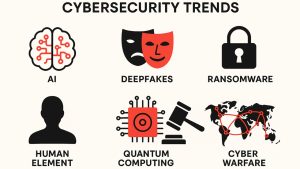
Phishing attacks have been around for decades, but in 2026, artificial intelligence has taken them to a dangerous new level. AI-powered phishing tools can craft personalized, convincing messages based on publicly available information about the target. These messages are difficult to distinguish from legitimate communications, making users more likely to fall victim.
Cybercriminals are now using AI to generate emails, text messages, and even voice messages that mimic trusted contacts, including colleagues, managers, and service providers. The result is a spike in data breaches, financial fraud, and identity theft.
Protection Tips:
- Use AI-driven email filters that can detect suspicious content.
- Verify unexpected requests for sensitive information through trusted channels.
- Educate employees and family members about recognizing subtle phishing attempts.
Ransomware Evolution
Ransomware attacks have become increasingly sophisticated and targeted. In 2026, attackers are focusing on critical infrastructure, healthcare systems, and cloud service providers, often demanding higher ransoms due to the sensitive nature of the data.
Advanced ransomware variants now employ AI to identify high-value targets and optimize attack strategies, making traditional security measures less effective. Many attacks are designed to remain hidden until the attacker has secured maximum leverage, such as encrypting backup files or spreading across connected networks.
Protection Tips:
- Maintain regular, encrypted backups stored offline.
- Keep systems and software updated with the latest security patches.
- Implement endpoint detection and response (EDR) tools to identify and mitigate suspicious activity.
Quantum Computing Threats
Quantum computing promises to revolutionize industries, but it also introduces cybersecurity risks. In 2026, quantum algorithms may threaten traditional encryption methods, such as RSA and ECC, which secure online transactions, communications, and sensitive data.
Cybercriminals with access to quantum computers could potentially break encryption faster than ever before, putting confidential information at risk. While full-scale quantum attacks are not yet widespread, organizations handling sensitive data must prepare for the eventual transition to quantum-resistant cryptography.
Protection Tips:
- Begin evaluating quantum-safe encryption protocols.
- Prioritize sensitive data protection and key management strategies.
- Stay informed about advancements in post-quantum cryptography standards.
Deepfake and Synthetic Media Threats
Deepfakes are synthetic media generated using AI that can convincingly mimic real people in videos, audio recordings, or images. In 2026, deepfakes are becoming a potent tool for cybercrime, including identity theft, fraud, and misinformation campaigns.
Attackers can create fake CEO messages to authorize financial transactions, fabricate evidence to blackmail individuals, or spread false news to manipulate public perception. The rise of AI-generated content has made it challenging for even experts to differentiate between real and fake media.
Protection Tips:
- Verify unusual media requests or instructions from senior executives using multiple communication channels.
- Employ AI detection tools that analyze content for signs of manipulation.
- Promote awareness among employees and the public about deepfake risks.
Internet of Things (IoT) Vulnerabilities
As smart devices become ubiquitous in homes and businesses, IoT vulnerabilities continue to expand. In 2026, millions of interconnected devices, including smart appliances, security cameras, and industrial sensors, remain poorly secured, offering cybercriminals new entry points.
IoT attacks can disrupt operations, steal sensitive information, or create botnets for large-scale distributed denial-of-service (DDoS) attacks. The scale of potential damage is significant because many devices lack robust security controls, firmware updates, or monitoring capabilities.
Protection Tips:
- Change default passwords and enable strong authentication on all IoT devices.
- Regularly update device firmware and apply security patches.
- Segment IoT devices on a separate network to minimize exposure to critical systems.
Supply Chain Attacks
Supply chain attacks target organizations by compromising software vendors, service providers, or partners. In 2026, these attacks have become more prevalent, as hackers exploit trusted relationships to infiltrate secure networks.
High-profile breaches in the past few years have demonstrated how a single vulnerable supplier can compromise thousands of clients. Supply chain attacks are difficult to detect because the initial breach occurs outside the target organization, often appearing legitimate.
Protection Tips:
- Assess the security posture of suppliers and third-party partners.
- Monitor software and network activity for unusual behavior.
- Establish contractual security requirements and incident response plans with vendors.
Cloud Security Risks
The adoption of cloud services continues to accelerate, but misconfigurations, insufficient access controls, and shared responsibility misunderstandings remain critical risks. In 2026, cloud-based attacks have become more sophisticated, targeting misconfigured storage buckets, APIs, and virtual networks.
Attackers exploit weak access policies or stolen credentials to exfiltrate sensitive data, launch ransomware campaigns, or manipulate cloud-hosted applications. Cloud security breaches can affect multiple organizations simultaneously due to multi-tenant infrastructure.
Protection Tips:
- Implement strong identity and access management (IAM) policies.
- Enable multi-factor authentication for all cloud accounts.
- Regularly audit configurations and monitor for unauthorized access.
Social Engineering and Insider Threats
While technology evolves, human vulnerabilities remain a significant security concern. Social engineering attacks, including pretexting, baiting, and spear-phishing, manipulate employees into revealing confidential information.
Insider threats, whether malicious or negligent, also continue to pose risks in 2026. Employees with privileged access can inadvertently or intentionally compromise sensitive systems, making security awareness training more crucial than ever.
Protection Tips:
- Conduct regular cybersecurity awareness training for all employees.
- Monitor privileged accounts for unusual activity.
- Foster a culture of security mindfulness and reporting.
Emerging Malware and Polymorphic Viruses
Malware is becoming more sophisticated, using polymorphic and metamorphic techniques to evade detection. In 2026, malware can alter its code dynamically, bypassing traditional signature-based antivirus solutions.
Cybercriminals are also developing malware that targets specific industries or devices, such as healthcare equipment or industrial control systems. This targeted approach increases the likelihood of successful attacks and amplifies potential damage.
Protection Tips:
- Use advanced threat detection tools powered by AI and behavioral analytics.
- Regularly update antivirus and endpoint protection software.
- Segment networks and implement least-privilege access policies.
Preparing for a Secure 2026: Proactive Cyber Hygiene
With cyber threats evolving rapidly, proactive cybersecurity measures are essential for staying protected in 2026. Organizations and individuals must adopt a multi-layered security strategy that combines technology, processes, and education.
Regularly updating software, employing AI-driven threat detection, and practicing good cyber hygiene are fundamental. Additionally, organizations should develop incident response plans, conduct routine security audits, and stay informed about emerging threats. Individuals can reduce risks by using strong passwords, multi-factor authentication, and secure communication practices.
The future of cybersecurity requires vigilance, adaptability, and a commitment to continuous learning. By understanding the top threats and implementing protective measures today, we can build resilience against the sophisticated attacks of tomorrow.
Conclusion: Staying Ahead of Cyber Threats in 2026
Cybersecurity in 2026 is a dynamic and challenging field. AI-powered attacks, ransomware evolution, quantum threats, deepfakes, IoT vulnerabilities, and cloud security risks are reshaping the digital landscape. While the threats are real and increasingly complex, proactive measures, education, and advanced tools can significantly reduce risks.
By staying informed, adopting a multi-layered security approach, and fostering a culture of cybersecurity awareness, individuals and organizations can safeguard their digital assets, reputation, and privacy. The key is vigilance and preparedness—security is not a one-time action but an ongoing commitment in the face of ever-evolving cyber threats.